The Planning Gap: Why Your Bucket List Never Leaves the List
I had 'motorcycle Sydney to London' on a napkin for three years before I actually left. The napkin lived in a desk drawer. I'd pull it out sometimes, look at the route I'd sketched through Southeast Asia and Central Asia, then put it back. The trip didn't get closer. The napkin just got softer.
What finally made it real wasn't motivation or inspiration or some life-changing epiphany. It was a spreadsheet. I sat down and listed every country I'd need a visa for, every border crossing with a reputation for hassle, the monsoon windows in India, the freezing point in the Karakoram. The fantasy turned into a logistics problem. And logistics problems have solutions.
The gap nobody talks about
Here's what I've noticed after 40-plus countries and conversations with hundreds of people over 50 who want bigger lives: the bottleneck is almost never money, courage, or desire. It's the space between 'I want to do that' and 'here is my plan to do that.' That space is where adventures go to die.
I call it the planning gap. You know the Tour du Mont Blanc exists. You've watched the YouTube videos. You can picture yourself on the trail above Chamonix. But you haven't figured out how many months of training your knees need, or which refuges book out six months ahead, or whether August or September gives you better weather windows. So the trip stays in the 'someday' file. Someday is not a date.
Write the list, then break it
Grab a piece of paper. Write down every adventure you'd regret not doing. Don't filter. RAGBRAI across Iowa, the Haute Route from Chamonix to Zermatt, a sailing passage across the Indian Ocean, a backcountry STOL flying course in the Idaho wilderness. Put them all down.
Now sort them: this year, next three years, before 70. That's your Master Adventure Plan. It's not a bucket list because bucket lists are wishes. This is a sequence with deadlines.
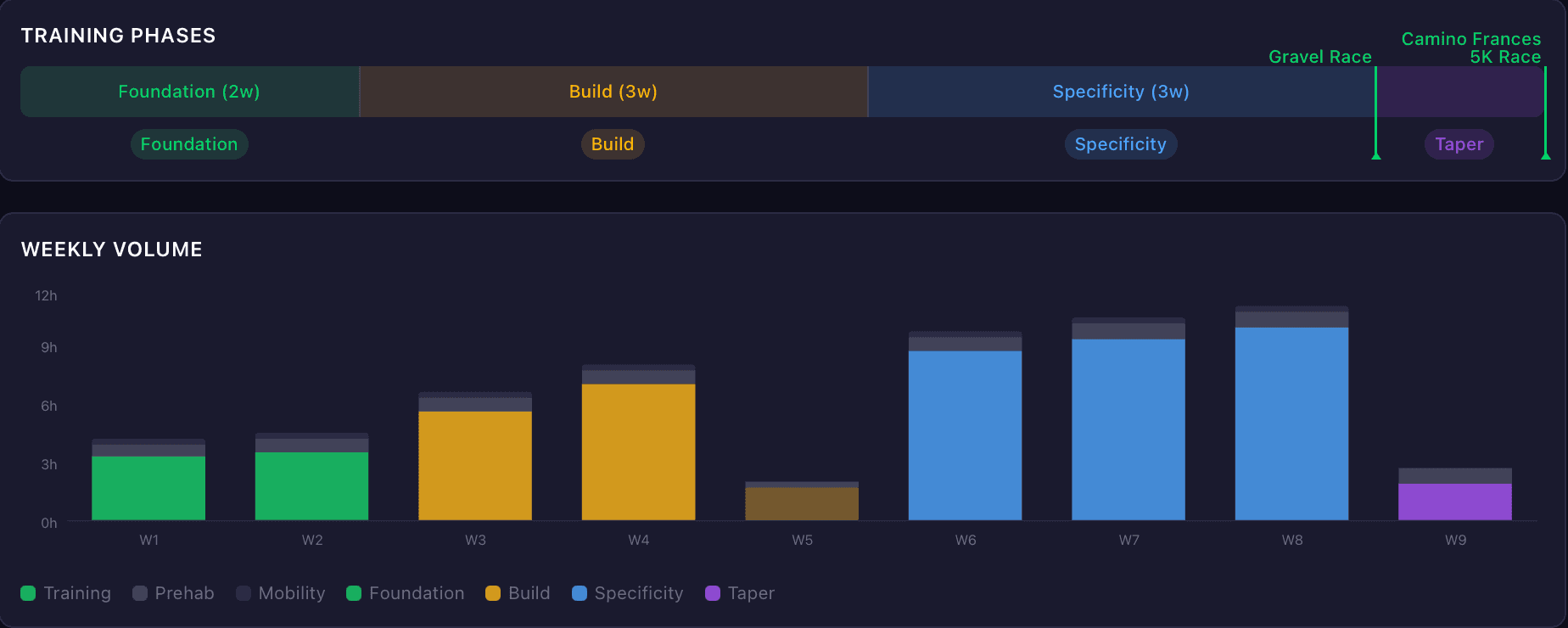
For each one, answer four questions. What fitness does it demand? What skills do I need? What gear do I need? When's the right season? Those answers will surprise you. The Tour du Mont Blanc needs eight months of progressive hiking with elevation gain, not a few weeks of walking around your neighborhood. A 70.3 Ironman needs a year if you're starting from a running base and can't swim 1.2 miles yet. I know because I did exactly that.
Fitness is the longest fuse
Flights are booked in minutes. Gear ships in days. Fitness takes months. At 59, I had heart surgery. At 60, I'm training for a marathon. That gap closed because I started the fitness work before I felt ready, not after. If I'd waited until everything was perfect, I'd still be waiting.
The rule is simple: before you book anything, figure out the physical standard you need to meet and work backwards from the event date. A Kilimanjaro summit attempt needs cardiovascular fitness and altitude tolerance you can't build in six weeks. An Ironman 70.3 needs swim, bike, and run fitness built over months of progressive overload with recovery weeks your 50-plus body actually requires. There are no shortcuts here. Not even close.
Block the calendar or lose it
Adventures booked 12 to 18 months out happen. Adventures planned for 'when things calm down' don't. Things never calm down. You know this.
I've watched people talk about sailing the Indian Ocean for a decade without blocking three weeks on a calendar. I actually did the crossing, and the hardest part wasn't the ocean. It was telling my employer I'd be unreachable for 21 days. But once those dates were locked, everything else organized itself around them. The calendar protects the commitment.
The risk conversation
Flying backcountry strips in Idaho, motorcycling through Pakistan, open ocean sailing: these carry real risk. Your family knows it even if you don't say it out loud. So say it out loud.
I've had this conversation with my wife before every major trip. It's not comfortable. But preparation, good equipment, and honest judgment reduce risk to something reasonable. They don't eliminate it. If you need certainty, stay home. If you can live with well-managed uncertainty, have the conversation, do the preparation, and go.
The real cost of not planning
People talk about the risk of adventure. Nobody talks about the risk of inaction. Every year you don't start training is a year your body gets harder to prepare. Every year you don't book the trip is a year the window narrows. The planning gap doesn't stay the same size. It grows.
The best time to start your Master Adventure Plan was five years ago. The second best time is this week, with a piece of paper and the four questions. Your bucket list has been patient long enough.
Found this useful? Share it.