Beyond the Resort: What Backcountry Skiing Actually Demands
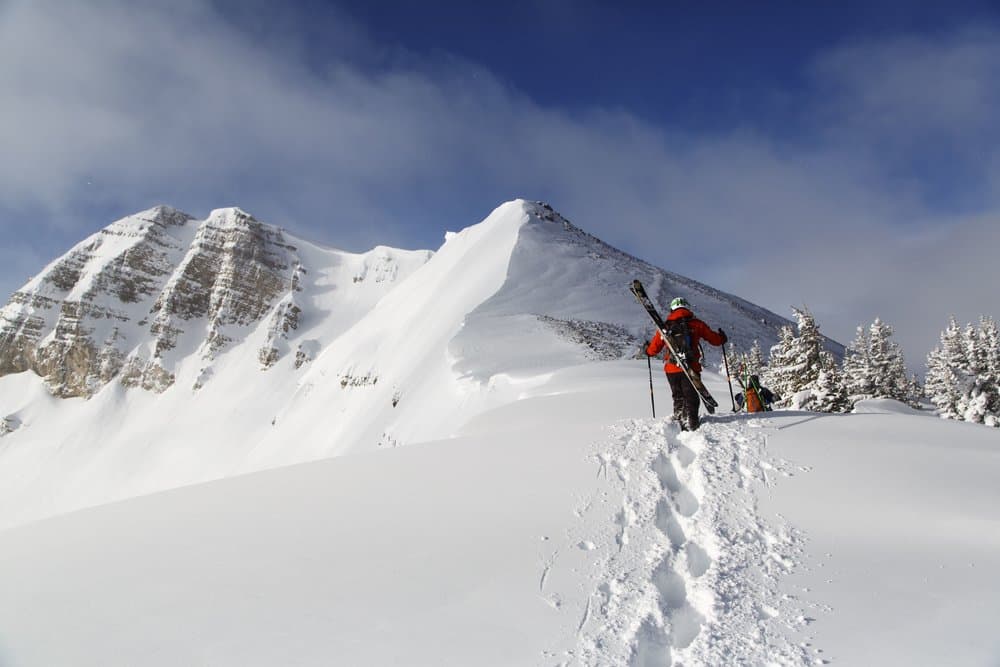
There is a moment on the skin track when the resort disappears behind you. No lift towers. No grooming patterns. No one telling you where to go. Just you, your breathing, and whatever the mountain decides to do next.
That moment is why people leave the resort. Not the $250 day passes at Vail or the 20-minute lift lines at Jackson Hole on a Saturday. Those are annoyances. The real pull is something older. You want to be in the mountains on your own terms.
But the backcountry is not the resort with the safety net removed. It is a different sport. And if you are over 50 and thinking about making the jump, you should know what it actually asks of you.
Avalanche education is not a suggestion
In February 2024, a group of experienced skiers triggered a slide in the Bridger Range outside Bozeman, Montana. One person was buried. They were all carrying beacons. They all knew how to ski. What they did not have was a shared framework for evaluating the snowpack that day.
The AIARE Level 1 course takes three days. You will dig snow pits, study crystal structures, practice companion rescue with a ticking clock, and learn to read avalanche bulletins from centers like the Colorado Avalanche Information Center or the Utah Avalanche Center. It costs around $350 to $500 depending on location.
Take it before you go out. Not after your first season. Before. The backcountry does not grade on a curve.
What your body needs to do
Skinning up 3,000 vertical feet in the Wasatch or on Teton Pass is not a leisurely hike. It is 60 to 90 minutes of sustained Zone 2 effort with a pack on your back, at altitude, on an unstable surface. Then you ski down through whatever the snow is doing that day. Breakable crust. Wind slab. Heavy Sierra cement.
The fitness profile is unusual. You need a strong aerobic base (think: can you comfortably sustain two hours of uphill movement?) and enough leg strength to absorb variable terrain on the descent. So squats and single-leg work matter. But the cardio matters more. If you are gassed at the top, your skiing falls apart, and bad skiing in the backcountry is dangerous skiing.
Build the engine in October, not January. By the time there is snow on the ground in the Cascades or the San Juans, you should already be fit enough to handle a moderate tour.
Gear that earns its weight
Beacon, probe, shovel. On your body, not in the car. Every person, every tour. There is no exception to this rule. A buried skier has about 15 minutes before survival rates collapse. Your partner cannot dig them out with their hands.
For the ski setup: if you are over 50 and your knees have opinions about things, go heavier than the gram-counters recommend. A 100mm-waist ski with a proper alpine touring binding like a Marker Kingpin or a Fritschi Tecton gives you real downhill performance. Yes, you carry the extra weight uphill. Your knees will repay you on every turn down.
And wax your skins. A cold, unwaxed skin on a 15-degree morning at the Berthoud Pass trailhead will have you sliding backwards before you clear the parking lot. Small detail, big difference.
The hardest skill to learn
It is not skiing. It is turning around. Backcountry skiing rewards people who can look at a slope they drove two hours to reach and say: not today. The avalanche forecast is Considerable. The wind loaded that rollover overnight. The temperature is rising faster than expected.
At the resort, the ski patrol makes those calls for you. In places like Cooke City or Rogers Pass, nobody is making that call except you and whoever you are with. And the people who last longest in this sport are the ones who treat going home early as a win, not a failure.
The backcountry will give you the best skiing of your life. Untracked powder in the Tetons. Spring corn on Mount Rainier. Sunrise tours above Crested Butte with no one else in sight. But it asks you to earn all of it, and to be honest about what you do not know.
The mountains do not care how many years you have been skiing resorts. They only care whether you showed up prepared.
Found this useful? Share it.