I Learned to Fly at 50. It Changed How I Think About Myself.
Most of the adventures on this site involve your feet hitting the ground. Running, trekking, climbing: gravity is the enemy, and you fight it step by step.
Flying is different. Flying is the one where you let go.
And learning to fly after 50 (whether it's a Cessna, a glider, a paraglider, or a hot air balloon) might be the single most rewarding challenge you take on in this half of your life. Not because it's easy. Because it isn't.
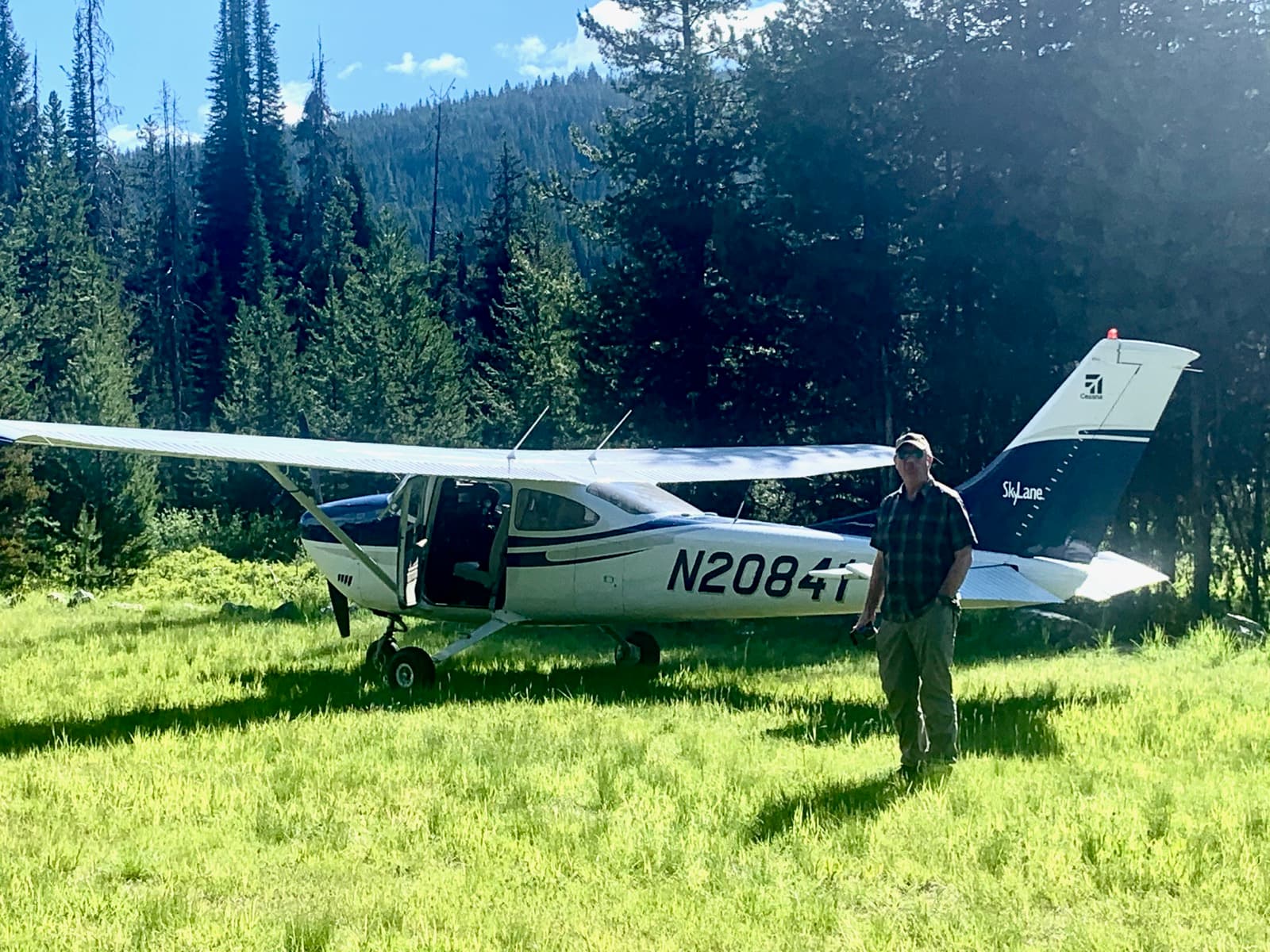
I know this because I did it. In 2016, aged 50, I earned my pilot's license. Then I bought a STOL plane and spent the next few years flying into backcountry airstrips across Idaho: short, rough strips carved into mountain valleys where the wind comes sideways and the margin for error is measured in feet. It was, without exaggeration, one of the most demanding and rewarding things I've ever done. Flying required me to be a student again, completely. That's what made it matter.
I'm not unusual. The aviation forums are full of people like me.
The people who did it anyway
People who spent decades dreaming about flight while they raised kids, built careers, paid mortgages. Then something shifted. The kids left. The career wound down. The mortgage got paid off. And the dream was still there, waiting on the tarmac.
One pilot writing in Air Facts Journal started flight training the week he turned 62 and earned his private pilot license just after 65. He bought a Grumman Tiger a year later and was still flying twelve years on. Another began at 58, took fifteen months and roughly eighty hours of instruction to earn his certificate, then bought a Van's RV-9A and flew two hundred hours a year for the sheer joy of it.
A contributor to Flight Training Central started at 69 after a lifetime in aircraft avionics maintenance. He earned his private pilot glider rating, then took delivery of a Stemme S12 motorglider. He read the pilot's operating handbook thirty times before flying it. That's not an exaggeration. That's how a sixty-nine-year-old approaches a new aircraft, with the thoroughness that only decades of life experience can teach.
These aren't outliers. The British Microlight Aircraft Association reports that the average age of a new student pilot in the UK is 44. In the US, the FAA imposes no upper age limit on earning a private pilot license. You need a third-class medical certificate to fly solo, but there's no birthday where the door slams shut.
And it's not just powered aircraft. FlightJunkies, a powered paragliding school in the US, has trained a student who was 87 years old. Allie Dunnington, who holds the women's world record for hot air balloon flights in the most countries (105), discovered ballooning later in life with no prior aviation background at all. She earned her private balloon license within a year and went on to become an instructor and examiner.
The pattern is always the same: someone who waited, decided to stop waiting, and discovered that the learning itself was the adventure.
Why it's harder (and why that's the point)
Nobody pretends it's the same as learning at twenty-two. It isn't.
Motor skills take longer to acquire. The reflexes that made you decent at squash at thirty don't respond quite the same way to crosswind landings at fifty-five. Ground school material (airspace classifications, weather theory, regulations) requires more repetition to stick. One pilot on the PPRuNe aviation forum described finally going solo after twenty-nine hours, having watched younger students manage it in ten.
The research backs this up. A study published in Aging (the peer-reviewed journal, based on work by the Movement Control and Neuroplasticity Research Group at KU Leuven) confirmed that older adults show somewhat less neuroplasticity than younger learners. But (and this is the important part) the same research found strong evidence for lifelong brain plasticity. New motor and cognitive skills can be acquired at any age. The progress may be slower. But it happens.
This is where it gets interesting for anyone over 50: the very difficulty of learning to fly is what makes it valuable.
Harvard Health published research in 2025 showing that engaging in diverse, mentally stimulating activities supports brain health by promoting neuroplasticity, the brain's ability to form new neural connections. The key isn't doing something easy. It's doing something that creates what researchers call a "sustained mismatch" between your current abilities and the demands of the task. Learning to fly, where you're simultaneously managing navigation, communication, weather assessment, and aircraft control, is about as sustained a mismatch as you can find.
In other words, the fact that it's hard is the feature. Not the bug.
The advantages nobody talks about
Older student pilots bring things to the cockpit that twenty-two-year- olds simply don't have.
Judgment. The ability to assess a deteriorating weather situation and decide to stay on the ground. That's not a motor skill. That's the product of decades of making consequential decisions. One PPRuNe commenter put it well: factors like weather decisions, workload prioritisation, and prudence are more important pilot skills than precise stick-and-rudder technique, and they're not the exclusive province of younger pilots.
Patience. A younger student might rush through a checklist. An older student who spent thirty years managing complex projects knows that checklists exist for a reason. That discipline saves lives in an airplane.
Resources. This is the practical bit. Flight training costs money, typically somewhere between $10,000 and $15,000 for a private pilot license in the US, more for instrument ratings. At fifty or sixty, you're more likely to have the financial flexibility to train consistently without six-month gaps that kill your momentum. Consistent training matters enormously. Students who fly two or three times a week progress far faster than those who fly once a fortnight.
Motivation. You're not learning to fly because your parents suggested it or because it seemed like a good career move. You're learning because you've wanted to do this for thirty years and you've finally decided that "someday" is today. That kind of motivation carries you through the bad lessons (and there will be bad lessons).
Pick your aircraft, pick your adventure
The beauty of learning to fly after 50 is that you don't have to pick one path.
Powered aircraft, the classic route. A Cessna 172 or Piper Cherokee, a local flight school, a private pilot license. Expect 60 to 80 hours of training if you're starting later in life (the FAA minimum is 40, but few people achieve that). This opens up cross-country travel, flying clubs, and a lifetime hobby that gets better the more you do it. And once you have the license, the doors keep opening. I went from a training Cessna to a STOL plane built for Idaho backcountry strips, the kind of flying where you're threading between canyon walls with 800 feet of gravel runway ahead of you. You don't start there. But you can get there.
Gliders: pure flying, no engine. You launch by tow or winch, then use thermals and ridge lift to stay aloft. It's the closest thing to being a bird. The skills transfer beautifully to powered flight, and the community tends to be welcoming and deeply knowledgeable. One pilot earned his glider rating at 69 and described it as the purest form of aviation.
Paragliding, the most accessible entry point. No license required in the US (though USHPA certification is strongly recommended). You can be making short flights within a few days of training. The physical demands are moderate: you need to be able to run a few steps on a hillside with about 25 lbs (11 kg) of gear. The mental demands are real: reading wind conditions, managing altitude, making landing decisions. And the sensation of free flight is unlike anything else.
Hot air balloons, the gentlest form of flight, and perhaps the most social. No medical certificate required. A private balloon license needs just ten hours of flight time. The culture revolves around festivals, dawn launches, and a chase crew on the ground. It's flight as community, not solitary pursuit.
Paramotoring, a powered paraglider, essentially a fan strapped to your back and a wing overhead. No FAA license required for ultralights. You can fly from a flat field, carry the whole kit in your car, and be in the air within five minutes of arriving. The barrier to entry is remarkably low.
The real reason to do it
Nobody tells you this about learning to fly after 50: it changes how you think about yourself.
For years, maybe decades, you've been doing things you already know how to do. Running a business. Managing a household. Cooking the same twelve meals. Driving the same roads. Competence becomes comfort. Comfort becomes routine. Routine becomes the quiet erosion of who you thought you'd be.
Then you sit in the left seat of a training aircraft for the first time and you don't know anything. You can't find the trim wheel. You over-correct on the rudder pedals. The radio calls come too fast and you miss half of them. You are, for the first time in a very long time, a complete beginner.
And it's wonderful.
Not because it feels good. It doesn't, not at first. It's wonderful because it proves something you'd started to doubt: that you can still learn. That your brain still works that way. That the person who used to take on new challenges and figure them out is still in there, under the comfortable routines and the reading glasses.
One pilot, writing after earning his license at 60, said it perfectly: we can all achieve much more than we often give ourselves credit for. The passions buried under decades of responsibility don't die. They wait.
Flight training pulls them back out. And once you're up there, the engine humming, the landscape opening up below you, the horizon impossibly wide, you understand that the challenge wasn't the obstacle. It was the invitation.
Getting started
If you're reading this and the idea has been living in your head for years, this is the honest advice from people who've done it:
- Get a medical first. Before you spend a penny on lessons, visit an Aviation Medical Examiner (AME) informally. Don't apply for the certificate yet; just have a conversation about your health history and any potential issues. This protects you from getting tangled in FAA paperwork before you're ready.
- Take a discovery flight. Every flight school offers them. Thirty to sixty minutes, usually around $200 to $300. You'll fly the aircraft. You'll know within minutes whether this is your thing.
- Find the right instructor. This matters more than the school, the aircraft, or the airport. You want someone patient, experienced with older students, and willing to adapt their teaching style. Don't be afraid to change instructors if the first one isn't working. Multiple pilots in the forums reported going through several instructors before finding the right fit.
- Fly consistently. Two to three lessons per week is ideal. Long gaps between sessions mean you spend the first fifteen minutes of every lesson re-learning what you forgot. If you can manage an intensive two-week course to get started, even better.
- Don't compare yourself to younger students. They'll solo faster. They'll need fewer hours. It doesn't matter. You're not racing them. You're flying.
The sky doesn't check your birth certificate. It just asks whether you're willing to learn.
TheNextHill helps adventurers over 50 find their next challenge, build a plan to get ready, and track their progress. Whether your next hill is a mountain, a marathon, or a runway, we're here to help you get there.
Found this useful? Share it.